
Si l’amour était sincère
J’aimerais savoir
Sans mensonges et sans poèmes
Pour me le faire croire
Lysandre‘s sophomore record, Portrait de l’invisible, was released February 13, 2026. When I first started listening to Lysandre a couple months ago, I was so excited to discover another kick ass Québécois artist that really reminded me of why I just get so obsessed with the talent in Québec. Over the course of forty minutes, Lysandre takes us on a twofold journey: feeling grief and trying to find peace along the way.

La bête, a slow and synthy opener, seems to touch on a mythical beast that haunts the writer. To me, the song seems to bid adieu to the monster of anxiety and insecurity. Seeking for refuge beyond the beast, Lysandre dreams of places with tall grass with knowledge of having said goodbye to the thing that gives her grief. As an opener, it sets a tender tone to the record.
5052 was the first single I had listened to before the album came out. In this stringy synthy pop rock song, Lysandre paints the picture of meeting someone for the first time and making indelible memories with them. Wide eyes, parties, and playing the song that person loves the most…5052 shows great tenderness of the excitement that reels us in when we first meet someone.
In L’odeur de la pluie, Lysandre sings about the jadedness of being in a relationship that simply is not working anymore. Dotted between synthy beats Lysandre sings, “Je n’ai pas, je n’ai plus rien contre toi / Laisse-moi, laisse-moi m’enfuir” or “I have nothing against you, I have nothing left / Let me, let me run away.”
Much like the rest of the record, the composition of L’odeur de la pluie itself is so stunning. The synth and electric guitar melt together to create a distinctly Lysandre sound. Lysandre has a great talent in mixing harmonies in her songs. They come together like a perfect soufflé, a treat that could so easily flounder if done by anyone else.
Pierrot fou d’amour offers the listener an upbeat sound. It’s also the first track that we see Lou-Adriane Cassidy and Ariane Roy offer their talents as backing vocals, adding a complex but complementary layer to Lysandre’s vocal stylings.
The song is markedly much more upbeat but it still sings of the performing happiness or love, drawing on the French pantomime known as Pierrot. Instead of actually experiencing the feelings, Lysandre touches on performance of a clown for other people. Sure, she can do those things…but this song asks: will I find that peace I so desperately seek if I’m the mime that mimics it?

One of my unabashed favourite songs is Un ange qui fume dans son lit. A celestial sounding song, it combines synths with the ever beautiful cello. The song itself continues on the theme of handling grief. With the backing vocals of Lou-Adriane Cassidy and Ariane Roy, Lysandre sings:
Je pense à toi aujourd’hui
Tes voix floues qui restent en vie
Je pense à toi aujourd’hui
Rêve ailleurs
Rêve encore
Or, “I think of you today, your blurred voices that remain alive. I think of you today. Dream elsewhere, dream again.” Oof, it tugs at my heart. And I know this will not be the last song on this album to do that.
The next stop on our cosmically pop-synth journey is Paumes crauses. In its composition, the clarinet in Paumes crauses is so gorgeous, and adds a bit of whimsy. To me, it seems Lysandre is singing about the words of an ex-partner had towards her. It reads as poetic memory of an impassioned argument between two people who had a level of care for one another. The only ones who can deliver a “masterful blow” are those who know you well enough to.
Les cowboys aux mains d’argent is a spectacular pop-rock tune. Thematically, it continues the idea of finding peace. In this case, it seemed to be about a cruel relationship and moving on from the distressing experience. Grieving a relationship that has been relentless and brutal offers its own process to move on.
J’ai enfin compris
Et j’ai reconstruit
Ce que tu avais dévoré sur ton chemin
Et je pardonne tes bottes qui résonnent
C’est la force d’un amour plus grand que le tien
While much of the record to this time has been tender and celestial, this song is larger than life. At one time, it builds you up and you feel haunted. Considering the subject matter of Les cowboys aux mains d’argent, I think it makes a sense. It strongly mimics the highs and lows of a power imbalanced relationship.
The song’s arrangement reminded me a lot of Florence and the Machine. I have no doubt if you like Florence – you will like this song too.

Fontaine de Jouvenance is a light pop rock song that continues the synth cosmic-pop that this album is all about. In fact, the song has moments that reminds me of 2000s acts like Feist. Lyrically, Fontaine de Jouvenance offers us an intimate plead for grief to make way for a sense of happiness once again.
I see the desire to evolve with grief with lines like “Je veux trouver ma liberté même si le gouffre sous mes pieds s’ouvre et m’écorche” or I want to find my freedom even if the abyss beneath my feet opens and flays me. A tender yearning for a new ground that sees the blue sky again.
And finally, JVPTM, a beautiful closing track. The piano sticks out to me with each listen. Lou-Adriane Cassidy’s backing vocals complement Lysandre’s so well that it effects a cinematic tone. The clarinet, as well, really drives that cinematic effect home. You really feel her passion in this song in particular. The emotionality of JVPTM is strongly felt throughout the nearly four minute song.
Thematically, it serves as a somber goodbye to the late loved one. Reading the lyrics, it’s hard not to feel emotional especially coupled with the song’s affecting arrangement. JVTPM opens with Lysandre describing her loved one writing with the wrong hand and waiting for the pain to pass and she ends it with “Je veux ta paix maintenant.” I get choked up writing it out.

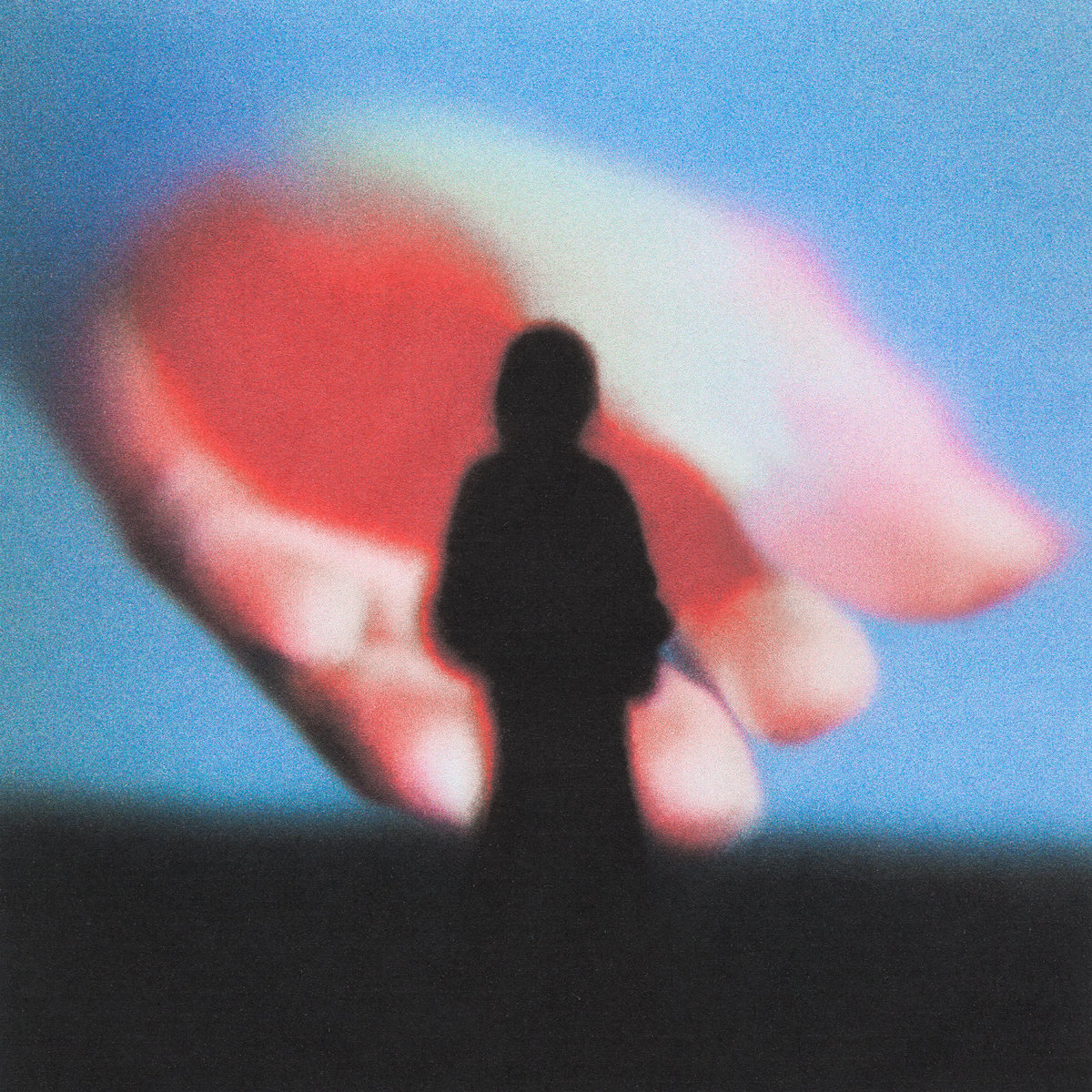
Before I end off, I need to talk about the album art. The album art offers a beautifully complex imagery that complements the content of the record itself perfectly. The dismembered hand reaching out to the the shadowy figure is reminiscent of a helping hand bringing you to lighter, happier time — into the great big blue of the sky, a space of limitless opportunity.
Lysandre brings us on a journey of trying to find moments of peace while grieving a big loss. The way she expresses herself is poetic and intricate, conjuring images that feel personal to what she went through. And yet, there is something incredibly universal about it too.

I wrote much of this piece based on my interpretations of Lysandre’s words and without consulting outside sources. Out of curiosity, I decided to read what others had published. In an interview with La Presse, Lysandre talks about her process in making the songs sound celestial despite dealing with great sorrow…I see that I was not far off in my interpretations.
Portrait de l’invisible delivers a masterfully orchestrated arrangement of songs. Lysandre poses thematically consistent album that is resonant in both lyrics and composition. Portrait de l’invisible is a strong continuation of Lysandre’s discography.
You can listen to Portrait de l’invisible below.
Have you listened to Portrait de l’invisible? If so, what is your favourite track? Let me know in the comments.
Leave a Reply