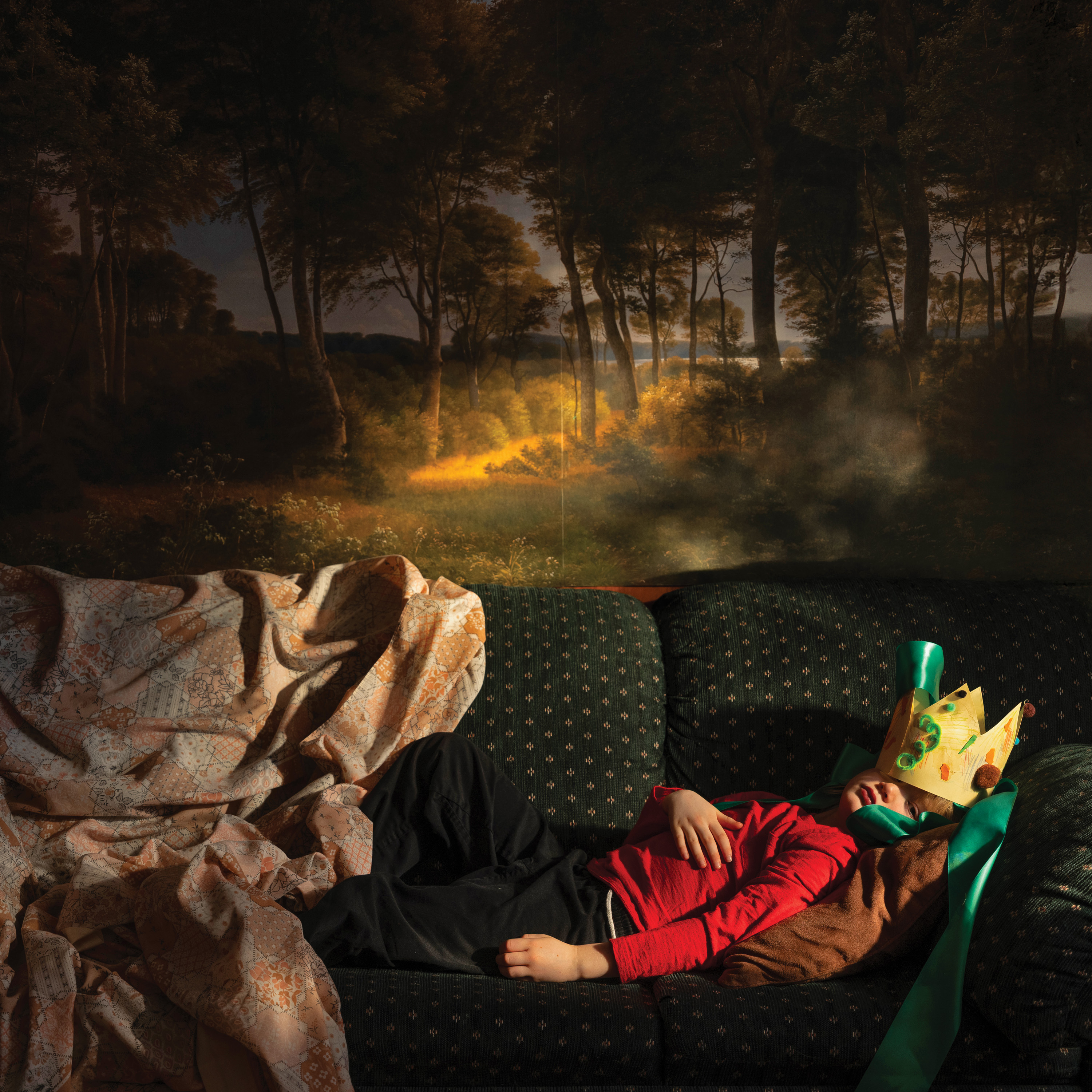

Montréal composer and pianist Jean-Michel Blais has launched his new album, mirador. Released September 25, the album casts a bright light at wide open landscapes. Mirador is perfect for the start of October, as the 12 track album sets the tone for the near unearthly sound of this album. Using spaces as refuge as an inspiration, mirador fosters an atmosphere of light and comfort using 12 baroque singers and a string quartet.
Mirador opens with muses. There is a hazy-like quality to the vocalizing at beginning of the song, like walking in a field in fog after it rains. As the song slowly opens through piano and string arrangements, we are trying to find the sun on a cloudy day. As the vocalists harmonize with the piano dancing in the background, it’s almost like feeling the sun through the clouds. You are warm though you cannot see it. Muses a strong opener to the album.
Ulysse, the first single and second track, is a roaringly passionate piece. Ulysse opens with a haunting vocal arrangement, creating an entirely bewitching atmosphere.
The choir layered with the piano almost makes me feel as though I’m in a Robert Eggers film. Much like the score to an A24 movie, ulysse feels complicated, real, and grounded to the nature of humanity.
All throughout the album, Blais’ masterful use of baroque singers builds the sense of bravado without being overbearing. It’s bright, but still leaves one feeling awestruck. I felt such a way when listening to pavane.

Carnavalito has a strong joyous energy. From the first few seconds, the strings add a wondrous air that becomes much more layered as the song goes on. Once the vocalists and pianos come together, it almost feels .
In its total composition, carnavalito makes me think about the happiness that is found in communing with loved ones, something that has been a part of the fabric of humanity.
Earlier, I mentioned that the album has a near cinematic experience, similar to that of films from A24. It makes sense then that Blais would go on to turn mirador into a narrative film.
Below, you can watch the short film set to mirador, directed by Adrian Villagomez.
On the inspiration for mirador, Blais says:
There is a crack, a crack in everything. That’s how the light gets in. One knocks, one shouts, yet no one comes, save for this dense silence. Until, by chance, by wandering, a door opens from within. a fissure is enough. the desire for an else where still unknown, a will, a direction finally accepted, guilt fades, the troubled mind regains its order. light returns. The sensation of stepping out of a wardrobe, a renewed coming out, and freedom appears, not as promise but as chosen risk, as adventure willingly embraced.

On kyrie, Blais brings together a potent blend of string, piano and vocals. As a woman who grew up in the Catholic church, I knew the word “kyrie” as part of the Latin prayer that is said in mass: kyrie eleison or, “Lord, have mercy.”
For me, the title is inextricable from the composition from the song. There is a yearning to the song, that feels almost like a plea to be something or go somewhere bigger, greater. An expression for something imagined to become tangible.
I can’t quite express it, but kyrie feels like standing in front of the Basilique du Sacré-Cœur in Montmartre. After that long walk up, you feel gratitude and awe for all that is around you: that incomparable view of Paris and the sheer beauty of the basilica itself.
Where kyrie felt like standing in front of the Sacré-Cœur, on laulasmaa, Blais brings us inside. We hear the choir build up and transform into a beautiful expression of light and beauty.
At the midpoint, just as the song slows down, the grand excellence of the choir fastens to makes you feel at once holy and awe-inspiring, yet deeply contemplative.
Laulasmaa reaches the pinnacle towards the last third of the song. It’s built you up to stare at gold encrusted tabernacles, intricate stonework and hand-painted murals. For me, laulasmaa is the standout song of mirador.
After the grandiosity of laulasmaa, I found the combination of the ninth songs and tenth songs to be a fascinating succession of songs. The ninth track, silhouettes is an ambient joy. It radiates an almost palpable sense of excitement. A new world opening, seen from the shadows in silhouettes.
The following song, querelle, feels a little more cautious. The vocals on querelle create a moment of pause, before settling into a pensive piano arrangement. From here, we reach the final song of the album.
La chambre des possibles has been a bit of an obsession of mine while re-listening to the album. The opening closely resembles a lullaby, the childlike joy of discovering the world. I do not believe it’s meant to put you into a slumber, rather a pensive state right before returning into reality.
For me, as the final track, it sends the listener off into the light…hoping that they are able to make most of their time in the light.
Of the album’s creation and themes, Blais says:
“Despite everything, mirador takes shape and reaches you. Starting from a hazy dream, taking the detours in stride, improvising, falling, getting back up, and pushing on, until arriving somewhere—often where we never planned to go. That’s a bit like life, too. From the child’s daydream in each of us to its fulfillment, mirador is above all the result of a deeply collective effort, of which I am only the visible tip of a huge iceberg”
Overall, mirador is not an album that begs you to question your surroundings. Rather, it invites you to re-contextualize how you’ve come to understand those places that seem familiar. When one leaves their creature comforts behind, you often return with a renewed sense of appreciation for the places and spaces you once knew well. One can look outward with a sense of growth…hopefully, that is. For that journey of growth is for you to take.
You can listen to mirador below or wherever you get your music. Check out tour dates here.
What do you think of mirador? Agree or disagree with my interpretations? I’m excited to know your point-of-view. Let me know in the comments below.
Leave a Reply